We need to do a better job of supporting parents, whether they’re working, in school, or taking care of children full-time.
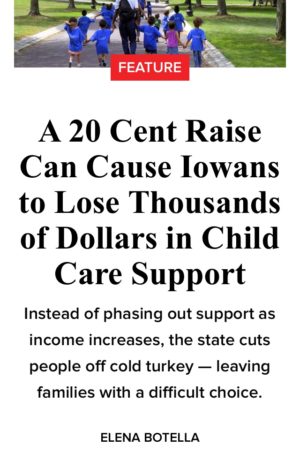
At the federal minimum wage, paying for child care for one child would take the first 26 hours of wages in a 40 hour week (if it’s an infant, the first 32 hours of wages). All 50 states have some amount of federally-funded assistance to help parents afford child care, but in many states these programs have long wait lists, or have extremely limited eligibility. In Iowa, parents lose all assistance at 145% of the federal poverty line (an income of around $25,000 per year for a parent with one child). My piece for TalkPoverty explores what this means for children, parents, employers and the community.
In personal news, I’m now in Oregon. Tomorrow I’ll be heading to Crater Lake National Park. My next stops after that are Sacramento and then the Bay Area.
Ride-sharing giants Uber and Lyft are on track to reach 780 million rides in 2018
In a recent working paper for the Federal Reserve of Boston, Anat Bracha and Mary Burke find that 26% of gig economy workers would accept a lower hourly wage to be able to work hours at a formal job instead of in the informal economy — even if the formal job didn’t come with benefits. While informal and ‘gig’ jobs are sometimes presented as offering greater flexibility and autonomy, Bracha and Burke’s findings strongly suggest that many would gladly ditch gig work in favor of greater predictability.
Their working paper also finds that the census districts with the highest rate of informal and gig labor force participation have the lowest rates of wage growth. One likely reason why? In places with a lot of gig workers, there are a lot of people who would like to work more paid hours — and that competition to find work drives wages down. Importantly, they find that wage growth is much more negatively tied to gig labor force participation in census districts than it is negatively tied to the unemployment rate.
All-in-all, their work suggests that our low “headline” unemployment rate of 3.7% may be misleading — people who would have previously been counted as unemployed now have more opportunities to pick up hours delivering food, driving passengers or walking dogs.
Obviously for many people, that’s better than not earning any money, but we’re probably not at “full employment” yet when so many people wouldn’t count themselves as “fully employed.” That may indicate the Fed is moving too quickly in raising rates.
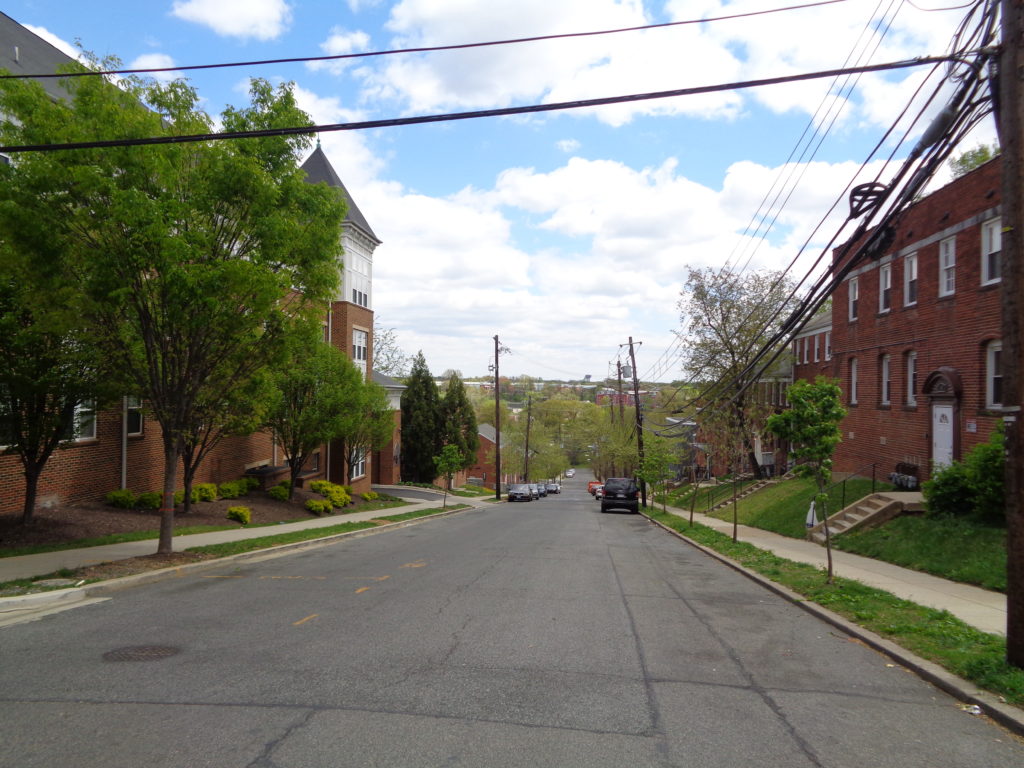
Congress Heights Neighborhood, where 74% of voters approved Initiative 77. Photo Credit of Eric T. Gunther
D.C. City Council held a hearing yesterday to consider overturning Initiative 77, which would gradually raise the tipped minimum wage for D.C. workers from $3.33 to $12.50, rising to $15 along with the base minimum wage in 2020.
Opponents of the Initiative claim to have the backing of not only the District’s restaurant owner and operators, but the city’s restaurant servers and bartenders as well. At yesterday’s hearing, Jill Tyler, Co-Owner of Michelin-starred restaurant Tail Up Goat in Adams Morgan said “by and large, the current system works,” resulting in workers “who can afford to buy a home, who can afford to raise a family,” noting that 40 of her 47 employees live in the District of Columbia, and nearly half live in Ward 1 where Tail Up Goat is located.
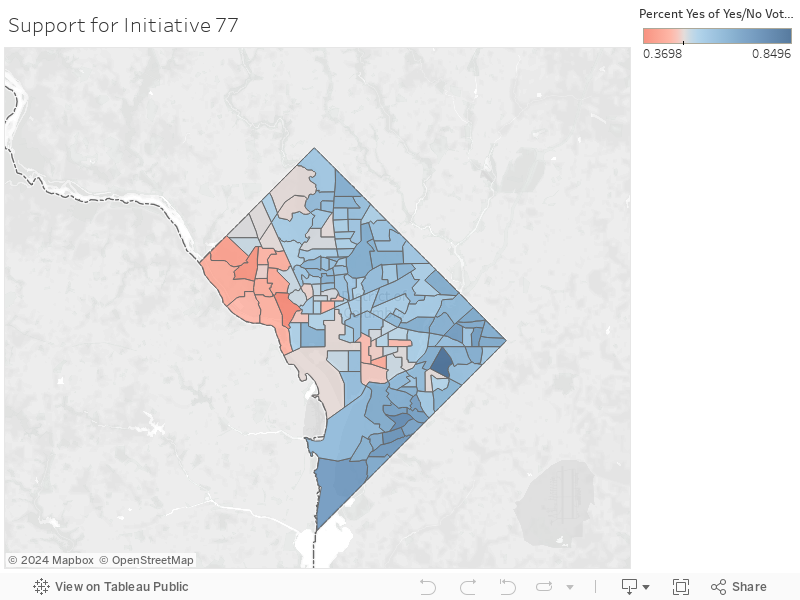
But supporters seeking to raise the tipped minimum wage state that many tipped workers have avoided speaking up publicly fearing retaliation from employers, and that those workers making poverty-level wages have less political and economic capital to make their voices heard. City Council Chairman Phil Mendelson noted “It’s hard for me to know what to do with the people who aren’t at the table.” But the easiest time and place for tipped workers to make their preferences was on Election Day itself, and while we don’t know how each person voted, it’s clear that the only neighborhoods that voted ‘No’ to raise the tipped minimum wage are the ones where very few restaurant workers live.
I matched U.S. Census Bureau data from the American Community Survey at the tract level with D.C. Board of Election data at the precinct level, and it tells a clear story.
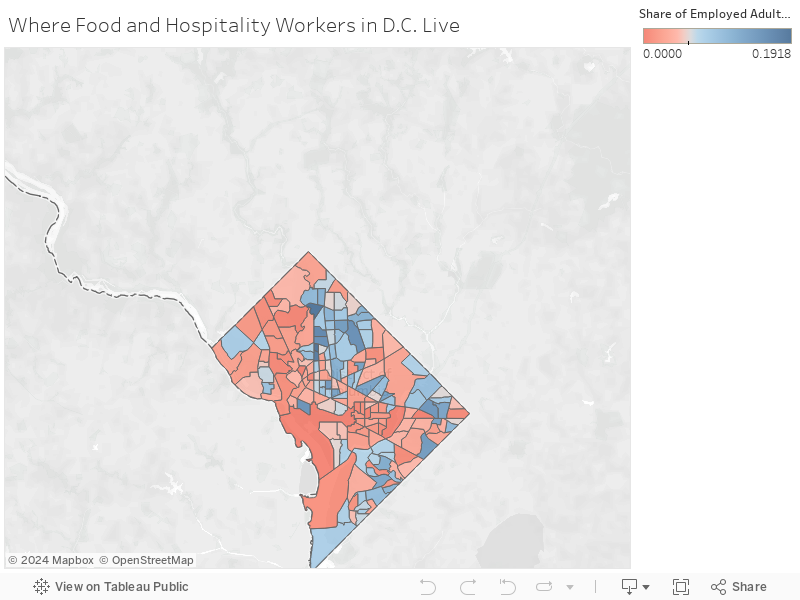
Across the district, 5.8% of all employed adults are food or hospitality workers, but those workers aren’t even concentrated throughout the city. In the average precinct that voted ‘Yes’ for the Initiative, 6.7% of employed adults are food or hospitality workers, compared to only 3.5% in those that voted ‘No’.
Perhaps not surprisingly, the precincts with the lowest level of support for Initiative 77 are the ones where voters are very unlikely to have a neighbor who relies on tips. In Precinct 5, home to Georgetown Cupcake, only 1% of employed adults are food or hospitality workers — and only 37% of voters said ‘Yes’ to Initiative 77, the lowest rate of any precinct in the district. Virtually none of the cities’ food and hospitality workers live in the Potomac-facing western neighborhoods voting ‘No’ to raise the tipped minimum wage.
All 29 precincts where more than 10% of employed adults are food or hospitality workers voted ‘Yes,’ like Precinct 120, near the Congress Heights Metro Stop in Southeast D.C., where 74% of votes were to pass Initiative 77.
Recalling her experiences working at Hot Shoppes as a waitress in Washington D.C. in 1970, Angie Whitehurst of Ward 4, now a StreetSense vendor, described the barriers facing tipped workers, who make an average wage of $14.41 an hour including tips according to the Economic Policy Center. “Most tipped workers do not have the benefits that the top 1% in this city have. If they take a day off, that’s a day without pay. It costs too much money just to take the bus to and from work,” Whitehurst said. “It’s an unlivable wage, and it’s like gambling.”